Bridges, Boats, and Bragging Rights: How You Cross the Water Says Everything About You in Mahony
Ask a Mahony local how they get across the water and brace yourself. You won't get a simple answer. You'll get a story, probably an opinion, maybe a mild argument, and almost certainly a strong recommendation delivered with the kind of conviction usually reserved for playoff predictions.
That's just how it works here. The water crossings of Mahony — ferries, bridges, and a handful of routes that don't show up on any tourist map — have quietly become one of the city's most defining cultural fault lines. Where you cross says something about where you live, what you value, and how long you've actually been paying attention.
The Ferry Faithful
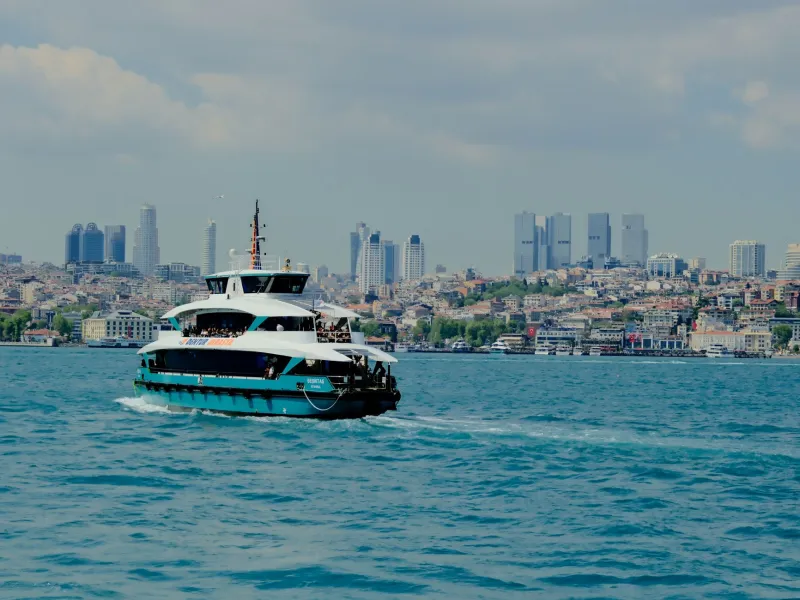
Let's start with the obvious one. The Mahony Central Ferry is the crossing most visitors picture when they imagine the city: the white-painted hull cutting across the channel, the skyline doing its thing in the background, seagulls making a racket overhead. It's picturesque. It's slow. And if you ask the people who ride it every single day, it is absolutely, non-negotiably the right way to cross.
Regular riders tend to form something close to a community. You'll find the same faces at the same times, nodding to each other with the quiet familiarity of people who've shared a few hundred sunrises without ever exchanging last names. Deck hands like Marcus, who has worked the Central Ferry for going on eleven years, know the regulars by sight. "Some of these folks, I've watched their kids grow up," he says, leaning against the railing as the boat pulls away from the dock. "This isn't just a ride. It's part of their day."
That sentiment is real. For neighborhoods on the eastern bank — areas that developed later, with fewer direct road connections to the city center — the ferry isn't just convenient. It's the thread that ties them to everything else. Residents there will tell you, without exaggeration, that the ferry schedule basically runs their morning.
The Bridge People (And Why They're Not Apologizing)
Then there are the bridge people. They'll tell you they're just being practical, and honestly, they have a point. The Calloway Bridge, which spans the northern stretch of the channel, is faster on most days, connects directly to two major arterials, and doesn't require you to check a departure schedule before you leave the house. For commuters, for families hauling groceries, for anyone who needs to be somewhere at a specific time, it just makes sense.
What bridge loyalists don't love is the implication — sometimes spoken, sometimes just hovering in the air — that they're missing something by not taking the boat. "I've heard the ferry speech a hundred times," laughs Priya, a graphic designer who crosses the Calloway every weekday. "Yes, the ferry is charming. But I also have a nine o'clock meeting."
The bridge has its own rhythm, its own regulars, its own unwritten rules about which lane moves faster at which hour. It's less romantic than the ferry, sure. But there's a real community of people who know this crossing like the back of their hand, and they're not interested in being told they're doing it wrong.
The Routes Nobody Talks About
Here's where things get genuinely interesting. Beyond the Central Ferry and the Calloway Bridge, Mahony has a handful of crossings that most visitors — and even some residents — don't know exist.
The Pelican Passage water taxi, for instance, operates out of a small dock tucked behind the fish market on the south end. It's not advertised heavily, runs on a more irregular schedule, and seats about twelve people at a squeeze. But for residents of the Pelican Bay neighborhood, it's a lifeline that cuts nearly twenty minutes off their commute compared to either of the main options. The operators, a husband-and-wife team named Del and Rosaria who've been running the route for close to fifteen years, are something of local legends. Del navigates; Rosaria handles the tickets and, apparently, everything else.
Then there's the old ford crossing near the southern marshlands — technically a low-water vehicle crossing that's passable for part of the year — which a certain type of Mahony resident treats as a point of pride. It's not practical for most people. But for those who know it, using it feels like a small act of local knowledge, a quiet signal that you've been paying attention.
Why the Debate Actually Matters
It would be easy to frame all of this as quirky local color, a fun piece of trivia to share at dinner. But the crossing debate in Mahony runs deeper than that. These routes have shaped which neighborhoods developed faster, which communities felt connected to the city center and which felt cut off, and how different parts of Mahony understand their own identity.
For years, residents on the eastern bank pushed hard for expanded ferry service, arguing that infrequent departures made their neighborhoods feel like an afterthought. The bridge, meanwhile, has been a recurring flashpoint in conversations about traffic planning, development, and who the city is actually building infrastructure for. Even the small water taxi routes carry weight — they exist because official options weren't meeting people's needs, and the fact that private operators stepped in to fill the gap says something about how Mahony's communities tend to solve problems.
So, Which Crossing Should You Take?
If you're visiting Mahony and you want the honest answer: take the ferry at least once. Do it on a weekday morning if you can, when the light is low and the regulars are doing their thing and the city is just waking up. It's one of those experiences that sneaks up on you.
But don't stop there. Walk the Calloway Bridge on a clear evening and watch the water from the middle. If you can track down the Pelican Passage water taxi, take it — even if it doesn't match your itinerary perfectly. Ask Del which direction has the better view. He'll tell you the same thing every time, but he'll mean it every time too.
The real point isn't which crossing is best. The real point is that Mahony has built a city where the act of getting from here to there carries genuine meaning — where a boat ride is a relationship and a bridge is a philosophy and a tiny water taxi run by a couple out of a fish market dock is, somehow, exactly what a neighborhood needed.
That's not something every city can claim. Cross wisely.