Step Inside: The Secret Courtyards and Hidden Plazas That Tell Mahony's Real Story
Most visitors to Mahony spend their time doing what makes sense — walking the main avenues, snapping photos of the waterfront, grabbing coffee at the spots everyone recommends. And honestly? That version of Mahony is great. But there's a whole other city living just a few steps off those well-worn paths, one that doesn't announce itself and definitely doesn't show up in the top ten lists.
We're talking about the courtyards. The hidden plazas. The tucked-away passages that feel like someone accidentally left a door open to another era.
If you're the kind of traveler who gets more excited by stumbling onto something unexpected than by checking off a landmark, this one's for you.
Why Mahony Is Built for This Kind of Exploration
Mahony's urban layout is a product of layered history — centuries of construction, demolition, rebuilding, and adaptation that left behind a city with a remarkably intimate interior geography. Unlike American cities that were largely planned on a grid from the start, Mahony grew organically, with buildings clustering around shared spaces, merchants carving out private courtyards, and neighborhoods folding in on themselves in ways that still reward the curious walker today.
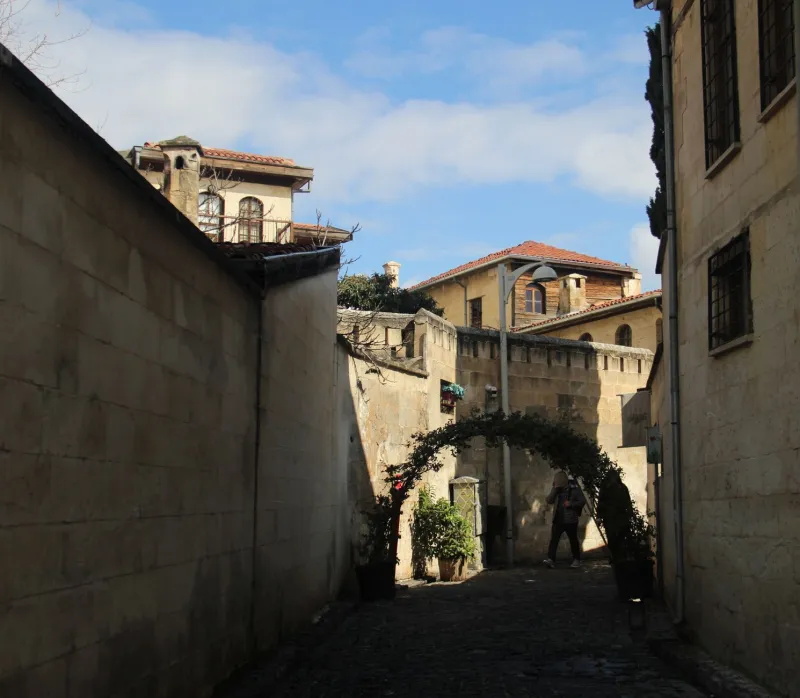
The result is a city that rewards slowing down. Streets that look like dead ends sometimes open into sun-drenched plazas. Narrow alleyways widen into quiet garden spaces used by locals for everything from afternoon lunches to impromptu chess games. The architecture here is vertical and layered, meaning there's almost always something interesting happening at eye level that the average tourist completely misses.
The Merchant Quarter's Forgotten Interior
One of the best places to start your courtyard crawl is Mahony's old Merchant Quarter, a neighborhood that still carries the bones of its commercial past. Walk the main street and you'll see the storefronts — some restored, some charmingly worn. But step through the arched passages between buildings and you'll find the real prize: a series of interconnected interior courtyards that once served as loading areas, storage yards, and informal meeting spaces for the traders who built this part of the city.
These days, a handful of those courtyards have been quietly adopted by locals. One hosts a rotating pop-up market on weekend mornings, with vendors selling everything from handmade ceramics to single-origin coffee. Another has been turned into a semi-permanent outdoor seating area for a restaurant that doesn't even have signage on the main road — you'd only know it was there if someone told you, or if you were willing to wander.
The stonework here is worth pausing over. You'll see construction styles spanning several centuries, sometimes within the same wall — patches of older masonry sitting alongside later additions, a kind of architectural patchwork that tells the story of a neighborhood that kept reinventing itself rather than starting from scratch.
The Garden Courtyards of the Old Residential Districts
Head into Mahony's older residential neighborhoods and the courtyards take on a different character entirely. These weren't commercial spaces — they were private, domestic, designed for the families and communities that lived around them. Some still function that way, accessible only to residents. But a surprising number have been opened up, either through community initiatives or simply because the walls that once enclosed them have been partially removed over time.
These garden courtyards are quieter and greener than their Merchant Quarter counterparts. Mature trees create canopy cover that makes them feel almost hidden even in broad daylight. You'll often find benches, old water features that may or may not still work, and the kind of ambient quiet that's genuinely hard to find in any city. Locals use these spaces for exactly the kind of unhurried living that visitors always say they want more of when they travel — reading, talking, doing absolutely nothing in particular.
If you're visiting with kids, these spaces are gold. Low-traffic, shaded, and interesting enough to hold attention without requiring an itinerary.
Reading the Architecture as You Go
One of the things that makes Mahony's hidden spaces so compelling is how much architectural information they contain. Out on the main streets, buildings present their best face — restored facades, updated signage, the kind of polish that comes with visibility. In the courtyards, you get the unedited version.
Look for the transition points between building materials. Older sections of Mahony often used locally quarried stone, which has a distinctive warm, slightly rough texture. Later additions shifted to brick, and later still to poured concrete. In a single courtyard, you might be looking at three or four distinct construction eras, each responding to the economic and social conditions of its time.
The doorways are worth paying attention to, too. Arched entryways with carved detailing often indicate prestige — these were the entrances to spaces that mattered, either commercially or socially. Simpler, more utilitarian openings tell a different story: service access, workers' passages, the functional infrastructure of daily life that rarely gets celebrated but kept everything running.
How to Actually Find These Spaces
Here's the honest answer: the best ones aren't on any map, and that's kind of the point. The most reliable approach is to build in time to wander without a destination. Give yourself a morning or an afternoon with no specific agenda and just start walking the side streets of the Merchant Quarter or the older residential neighborhoods. Look for passages between buildings, gaps in walls, archways that seem to lead somewhere. Most of them do.
A few practical tips:
- Go early or late. Midday in Mahony can get busy, and the courtyards that are most accessible also get the most foot traffic. Early morning light is genuinely spectacular in the enclosed spaces, and late afternoon brings a golden quality that makes the stonework glow.
- Talk to people. Locals know which courtyards are worth finding and are usually happy to point you toward them if you ask. The question itself tends to open up conversations.
- Don't assume a closed gate means no entry. Some of the best spaces have gates that are simply latched, not locked. Give it a gentle push before you walk away.
- Bring a good camera or just your phone. The light inside these spaces is unpredictable and often extraordinary. You'll want to document it.
The Bigger Picture
What makes Mahony's courtyard culture worth seeking out isn't just the aesthetic payoff, though that's real. It's the sense that you're accessing a version of the city that hasn't been packaged for visitors — one that exists because real people needed it, used it, and kept using it across generations.
That's a rarer experience than it sounds. A lot of travel involves moving through spaces that have been curated for the traveler's gaze. Mahony's hidden interiors are something else: they're functional, lived-in, and genuinely indifferent to whether you find them or not. When you do, it feels like the city let you in on something.
That's the version of Mahony worth coming back for.