These Songs Are Mahony: The Local Artists Writing the City's Next Chapter in Music
There's a song going around Mahony right now. You might catch it drifting out of an open bar window on a Thursday night, or humming from a speaker at the weekend market on Delacroix Street. It's got this unhurried groove to it — something between a folk ballad and a slow-burn R&B track — and the lyrics name-drop a neighborhood you've probably already walked through. If you've spent any real time in this city, it hits different.
That song, "Carver Hill in the Rain," is the work of singer-songwriter Nadia Osei, a Mahony native who grew up in the very neighborhood she sings about. And she's far from alone. Across the city, a loose but passionate movement of local musicians is turning Mahony itself into subject matter — writing original work that uses the city's streets, its people, and its particular emotional texture as raw material.
More Than Background Music
For a long time, Mahony's music scene was celebrated for its energy but rarely for its specificity. Talented artists passed through, played great shows, and moved on. The city was a launching pad, not a muse.
That's changing. Ask any venue booker or record shop owner around town, and they'll tell you the same thing: there's been a noticeable shift toward music that's about somewhere, not just made somewhere. And increasingly, that somewhere is Mahony.
"I got tired of writing songs that could've been set anywhere," says Tomás Reyes, who fronts the indie-folk trio Lowland Current. Their debut EP, released last spring, opens with a track built around the sounds of the old Mahony rail yards — literal field recordings layered beneath acoustic guitar. "I wanted someone from out of town to listen and feel like they'd just been handed a map. Not a tourist map. A real one."
That impulse — to render a place honestly rather than generically — runs through almost every conversation you have with musicians in this scene.
The Neighborhoods as Lyrics
What makes this movement interesting isn't just the sentiment behind it. It's the specificity. These songs don't just say "I love my city" — they zoom in.
Osei's "Carver Hill in the Rain" describes the particular way puddles collect at the intersection of Maren and Fifth, the smell of the Dominican bakery that opens at 5 a.m., the sound of the bus that never quite runs on time. It's hyperlocal in a way that feels almost radical for a pop song.
"People from Carver Hill hear it and they lose their minds," she laughs. "They'll text me like, 'You got the bus right.' That means more to me than any streaming number."
But here's the thing — visitors are connecting with it too. Mahony's tourism social channels have seen fans from out of state tagging the actual intersection from Osei's lyrics, making little pilgrimages to the spot. A song became a destination.
That crossover — between deeply local resonance and genuine outside interest — is exactly what makes this scene worth paying attention to if you're visiting Mahony and want to go deeper than the standard itinerary.
Where to Hear It Live
The best way to experience this music isn't through a playlist. It's in person, ideally on a weeknight when the rooms are small and the artists are loose.
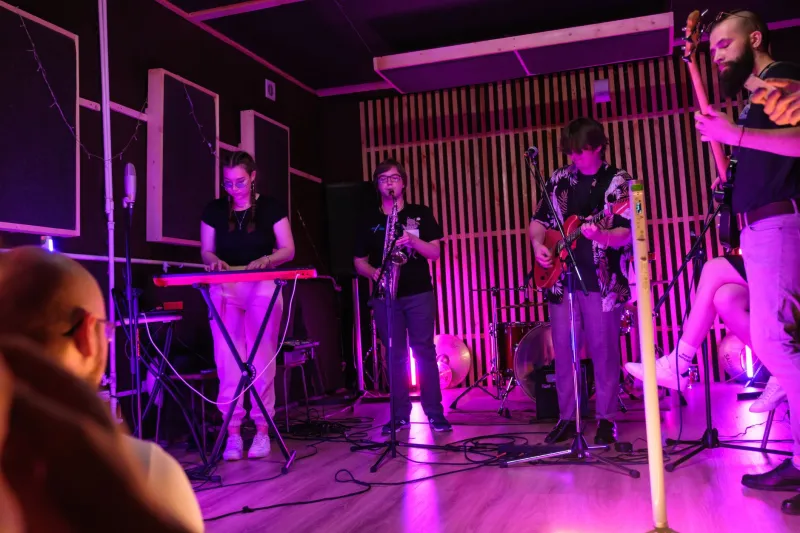
The Lantern Room, a converted storage space near the old port district, hosts an original-music-only policy on Wednesday nights. No covers, no standards — just artists playing their own work. It's become a kind of unofficial home base for the Mahony songwriter community, and the vibe is somewhere between a listening room and a neighborhood living room.
Over on the west side, The Foundry Sessions — a monthly showcase held in the back of a ceramics studio — has been platforming artists who specifically write about Mahony life. The organizers are intentional about it: every performer is asked to introduce their songs by talking about the local experience that inspired them. It turns the show into something closer to oral history.
For something more spontaneous, the Sunday afternoon sessions at Porch & Vine (a wine bar with a small stage near Aldermoor Park) tend to draw artists who are workshopping new material. You might hear a song about Mahony that doesn't even have a title yet.
The Sound of a City Finding Its Voice
It's worth asking why this is happening now. Mahony has always had musicians. What's different?
Part of it is practical. Home recording technology has made it easier for artists to produce and release music without needing to relocate to a major music market. You don't have to move to Nashville or LA to have a career anymore, and that means more artists are staying put — and writing about where they actually live.
But there's also something cultural going on. Several artists mention a growing civic pride in Mahony, a sense that the city is having a moment and that people want to document it before it changes too much.
"Every city eventually gets discovered," says Reyes. "And when that happens, things shift. I think a lot of us feel this urgency to capture what Mahony is right now, before it becomes something else. Music is how we do that."
DJ and producer Kezia Fontaine, who blends electronic production with field recordings from Mahony's outdoor markets and transit hubs, frames it slightly differently. "I'm making an archive," she says simply. "Fifty years from now, someone can put on one of my tracks and hear what this city sounded like in this decade."
How Visitors Can Plug In
If you're coming to Mahony and you want to connect with this scene, a few practical tips:
Follow local music blogs and Instagram accounts before you arrive — several Mahony-based music writers cover this community closely and post weekly show listings. The Mahony Music Collective also maintains a running calendar of original-music events across the city.
When you're at a show, don't be shy about talking to the artists afterward. This is a community-minded scene, and musicians here tend to be generous with recommendations — they'll point you to other shows, other neighborhoods, other songs worth knowing.
And if you hear something that stops you in your tracks — a lyric that names a street you walked down that afternoon, a melody that somehow sounds like the light at dusk over the harbor — pay attention to that feeling. That's Mahony working on you.
The city has always had a way of getting under your skin. Now it's finally got a soundtrack to match.