New Life in Old Walls: The Buildings Mahony Refused to Leave Behind
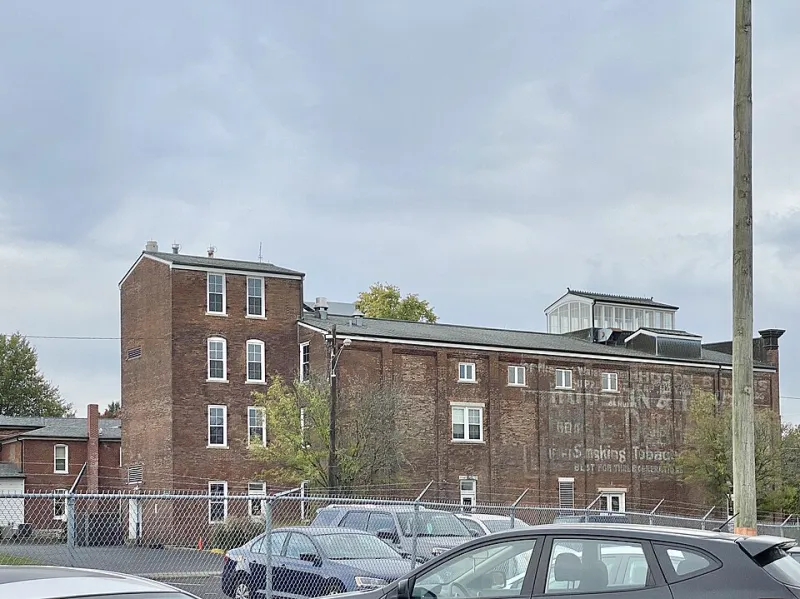
Photo: w_lemay, CC BY-SA 2.0, via Wikimedia Commons
There's a particular kind of magic that happens when a city decides a building is worth saving. Not restoring to its original state — preserved under glass, untouchable — but actually saving, the way you save something by giving it a reason to keep going. Mahony has gotten very good at this.
The city's relationship with its older industrial and civic architecture has always been complicated. For a stretch of years in the late twentieth century, the default answer to an empty building was demolition. Whole blocks disappeared. Then, gradually, a different instinct took hold — driven partly by economics, partly by a genuine community attachment to the physical memory of the city. What emerged is a collection of adaptive reuse projects that now rank among Mahony's most interesting places to spend an afternoon.
The Grain Building: From Storage to Spectacle
The Grain Building on the south waterfront was, for most of its working life, exactly what it sounds like: a utilitarian structure built to hold things, not impress people. The bones were extraordinary — vaulted ceilings, thick masonry walls, windows placed for ventilation rather than views. But for nearly two decades after the facility closed, it sat empty and slowly deteriorating.
The team that took it over in the early 2010s made a deliberate decision not to erase its history. Original grain chutes were left in place. The patina on the ironwork was preserved. What was added — a main event hall, a cluster of artisan food stalls, a rooftop terrace with views across the water — was designed to feel like a conversation with the existing structure rather than a replacement of it.
"We kept asking ourselves what the building wanted to be," says one of the project's lead designers, who has been based in Mahony for over twenty years. "The answer kept coming back to: a place where people gather. That's not so different from what grain storage actually is, when you think about it. Community feeding itself."
Today the Grain Building hosts farmers markets, private events, and a rotating cast of food vendors that changes with the seasons. It's busy without being frantic, and the space has a quality that new construction rarely achieves: the sense that it's been here long enough to mean something.
The Old Print Works: Ink in the Walls, Creativity in the Air
A few blocks north of the Arts Corridor, the former print works facility spent years as a blank spot on the neighborhood map — too large to ignore, too structurally complex to redevelop cheaply. The building's industrial heritage was visible in every detail: heavy concrete floors designed to absorb the vibration of press machinery, skylights running the full length of the central hall, a network of utility rooms and storage spaces branching off the main floor like a rabbit warren.
The group that eventually took on the project — a loose coalition of artists, architects, and local investors — saw those quirks as assets. The skylights made the central hall one of the best-lit studio spaces in the city. The utility rooms became individual artist studios, ceramics workshops, and a small recording facility. The concrete floors, it turned out, are ideal for large-scale installation work.
The Old Print Works now operates as a hybrid creative campus: part working studio complex, part event venue, part gallery. It runs an open-studio weekend twice a year that draws visitors from across the region, and its ground-floor café — occupying what was once the building's loading dock — has become a genuine neighborhood institution.
What makes it worth visiting even if you're not there for an event is the texture of the place. The walls still carry traces of ink. The machinery is gone but the infrastructure that served it remains, repurposed in ways that are sometimes practical and sometimes purely aesthetic. It feels like a building that remembers what it was.
The Civic Baths: A Public Building Finds Its Public Again
Not all of Mahony's adaptive reuse stories are industrial. The former public baths complex in the Aldermoor neighborhood represents a different kind of reclamation — the recovery of a civic building that once served a community function and has found its way back to something similar.
Built in the early twentieth century as part of a public health initiative, the baths operated for decades before closing in the 1980s. The building's architecture was civic in the grandest sense: high arched windows, decorative tilework, a main hall designed to feel monumental even when full of people in swimming costumes. It sat vacant for years, occasionally used for film shoots and pop-up events, while various redevelopment proposals came and went.
The current incarnation — a wellness and community center that incorporates a small performance space, a café, and a restored pool — opened after years of community consultation and fundraising. The tilework has been meticulously preserved. The original changing room cubicles now serve as private reading nooks. The pool, once purely functional, is the centerpiece of a space that manages to feel both historically grounded and entirely contemporary.
"This building belongs to the neighborhood," says the center's director, a Mahony native who remembers visiting the baths as a child. "Our job was to make sure it kept belonging to the neighborhood. Not to us, not to any particular group — to the people who walk past it every day."
Tips for Visiting Mahony's Reimagined Spaces
These aren't always easy to find through standard tourist channels, so a little advance planning goes a long way.
Check event calendars. Many of Mahony's adaptive reuse venues are at their best during scheduled programming — markets, open studios, performances. Visiting on a random Tuesday might mean a quieter experience, which has its own appeal, but the full energy of these spaces comes through when they're activated.
Look for the original details. Part of the pleasure of visiting these buildings is noticing what's been kept. Ask staff about the history — most are happy to share it, and the stories behind individual preserved elements are often remarkable.
Don't rush. These spaces are designed to be inhabited, not checked off. Budget more time than you think you need, especially at larger venues like the Grain Building and the Old Print Works.
Bring cash. The artisan vendors and smaller food stalls that operate within these venues often prefer it, and you'll likely find something worth buying.
Mahony's old buildings didn't just survive. They adapted, the same way the city always has — by finding new reasons to stay relevant without pretending the past didn't happen. That's a harder thing to pull off than it looks, and when you're standing inside one of these spaces, you feel exactly why it was worth the effort.