How Mahony Talks: The Sounds, Slang, and Vocal Fingerprints That Make Locals Instantly Recognizable
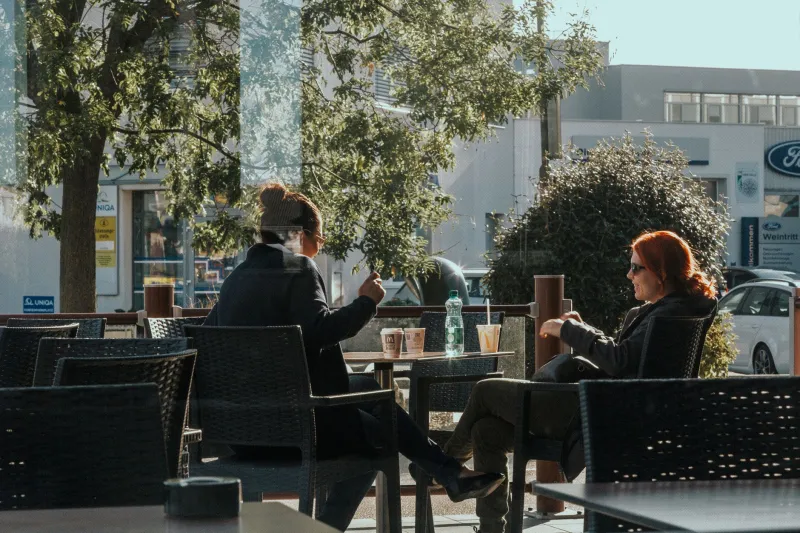
You've probably done it. You land in a new city, spend a couple of days absorbing the vibe, and then — somewhere around day three — you try to mirror how the locals talk. Maybe you pick up a word or two. Maybe you attempt the cadence. And then someone looks at you sideways, smiles politely, and you realize: you've been clocked.
Mahony is particularly unforgiving in this regard. The city's accent is deceptively complex — it doesn't sound like a dramatic regional drawl that screams I'm from somewhere specific. It's subtler than that. And that subtlety is exactly what makes it so hard to replicate.
The Roots Nobody Talks About
To understand how Mahony sounds today, you have to go back a few generations. The city developed at a crossroads — literally and culturally — drawing working-class communities from several distinct migration waves throughout the late 19th and early 20th centuries. Each group left fingerprints on the local dialect.
Dr. Elaine Forsythe, a sociolinguist who has spent over a decade studying urban dialect formation in mid-sized American cities, describes Mahony's speech as "a palimpsest — you can hear the layers if you know what you're listening for." The influence of maritime trade communities shaped certain vowel sounds. Later arrivals from inland agricultural regions softened the harder consonants. The result is something genuinely unique: an accent that doesn't fully belong to any one tradition.
What's interesting is how stable the core features have remained. Despite decades of television, the internet, and an influx of transplants, certain phonetic markers have held on with remarkable stubbornness.
The Sounds That Give It Away
Ask any linguist what distinguishes Mahony speech and they'll likely start with the vowels. The local treatment of the short "a" sound — as in words like path, laugh, or after — sits in a middle zone that doesn't quite match either the flat Midwestern pronunciation or the broader New England version. Longtime resident and retired schoolteacher Dorothea Vance puts it simply: "We don't stretch it and we don't flatten it. It just sits."
Then there's the rhythm. Mahony speakers tend to front-load their sentences — the emphasis lands early, giving their speech a kind of declarative punch even in casual conversation. A sentence that might trail off with a questioning lilt in other cities lands with a period in Mahony. It reads as confident, sometimes blunt, occasionally mistaken for rudeness by visitors who aren't used to it.
Consonant clusters at the ends of words also get a distinctive treatment. The final "t" in words like street or right gets softened — not dropped entirely the way you'd hear in some urban dialects, but rounded in a way that takes a trained ear to catch.
The Slang Layer
Beyond phonetics, there's vocabulary. Every city has its slang, but Mahony's local lexicon has some terms that have never made it into any trend piece or viral social media moment — and locals seem to prefer it that way.
A few examples that come up repeatedly in conversations with longtime residents:
- "Running the loop" — not a fitness term. It refers to making a series of social stops through a neighborhood, usually on foot, with no particular urgency. "We're just running the loop" means don't expect us anywhere specific anytime soon.
- "Corning" — standing at a corner talking for an extended, unhurried period. Not loitering. Corning is intentional, social, and considered a perfectly legitimate use of an afternoon.
- "It'll weather" — an expression of resigned optimism. Something went wrong? It'll weather. Plans fell through? It'll weather. It's not defeat; it's a philosophy.
These terms don't appear in travel guides. You won't find them on a laminated card at the airport. You hear them by spending time in the right places and paying attention.
Spotting the Difference: Locals vs. Learners
Here's the thing about Mahony locals — they're not trying to protect their accent like some precious artifact. Most of them don't even think about it consciously. But they notice immediately when someone's performing it.
The tells are consistent. Visitors who've done their homework tend to over-apply the vowel shift, making it sound theatrical. They'll use the slang in the wrong context — dropping "corning" into a situation that's clearly just a quick chat, not a genuine corner hang. And the rhythm is almost impossible to fake because it's not just about sound; it's about pacing, about how much silence you're comfortable with between thoughts.
"You can always tell," says Marcus Delroy, who grew up in Mahony's Westport district and has lived here his whole life. "It's not the words. It's whether the words feel like they cost you anything to say. Locals don't perform. We just talk."
Why It Matters Beyond Curiosity
There's a real reason to care about this beyond linguistic tourism. How a place talks tells you what it values. Mahony's front-loaded sentences and declarative rhythm reflect a community that prizes directness. The slang around slow, unhurried social interaction — corning, running the loop — points to a culture that hasn't entirely surrendered to the productivity-at-all-costs mentality that defines so many American cities right now.
The accent is, in a sense, a living document of the city's priorities.
You don't need to mimic it to appreciate it. In fact, you probably shouldn't try. But listening for it — really listening — gives you a way into Mahony that no walking tour or museum exhibit can replicate. It's the city talking to itself, and if you're quiet enough, you get to hear the whole conversation.