Something's Happening in Fenwick: The Neighborhood That's Quietly Becoming Mahony's Most Exciting Place to Be
There's a particular moment in a neighborhood's life that's almost impossible to photograph. It happens before the coffee shops are Instagrammable, before the real estate listings start using words like vibrant and up-and-coming, before anyone writes a piece like this one. It's the moment when something shifts — when the people who stayed through the hard years are joined by people who chose to arrive, and the combination produces something that feels genuinely alive.
Fenwick is in that moment right now.
If you've been to Mahony before and skipped Fenwick entirely, you're in good company. For most of the past two decades, the neighborhood sat in a kind of civic blind spot — not dangerous, not derelict, but overlooked in the way that neighborhoods get overlooked when they're not convenient to anything tourists prioritize. The waterfront gets the visitors. The central market district gets the food press. Fenwick got the through-traffic.
That's changing fast.
The People Who Never Left
To understand what's happening in Fenwick now, you have to start with the people who were there when nobody was paying attention.
Roosevelt Amara has run a framing and print shop on Caldwell Street for twenty-two years. When the neighborhood's commercial strip thinned out in the early 2000s — a familiar story of big-box competition and economic pressure — he stayed. He adjusted his business model, started framing work for local artists at accessible rates, and became, without intending to, a kind of anchor institution for a creative community that had nowhere else affordable to land.
"People needed a place to put their work," he says, gesturing at the walls of his shop, which are covered floor-to-ceiling with pieces waiting for pickup. "I was already here. It made sense."
Amara's shop became a meeting point. Artists would come to drop off work and end up talking for two hours. Eventually those conversations turned into something more organized — a loose collective that started using an empty warehouse space two blocks away for group shows, open studios, and the occasional event that was really just an excuse to see each other's work.
That warehouse, now known informally as the Caldwell Works, is one of the places you need to visit when you come to Fenwick.
What's Opening (and What's Been Here All Along)
The new arrivals in Fenwick have been smart about one thing: they've paid attention to what was already there.
Chef Simone Adeyemi opened her restaurant, Groundwork, on a formerly vacant stretch of Fenwick's main corridor last spring. The menu is built around ingredients sourced from within a fifty-mile radius of the city, but the more interesting story is the space itself. Rather than gutting the building she took over — a former dry goods store with original shelving and exposed brick that's been there since the 1940s — she preserved as much as possible. The result is a dining room that feels like it grew out of the neighborhood rather than being installed in it.
"I didn't want to open a restaurant that could be anywhere," she explains. "I wanted to open one that could only be here."
Across the street, a ceramics studio that has operated quietly for years recently opened its doors to the public on weekend mornings, offering drop-in sessions that are as much social gathering as craft class. The instructor, a Fenwick native named Petra Hollis, has watched the neighborhood shift from her studio window with a mix of hope and wariness.
"The energy is good right now," she says carefully. "I just hope it stays good for everyone who's already here, not just the people arriving."
It's a tension that runs through every conversation about Fenwick's transformation — the awareness that the forces driving creative renewal can also drive displacement, and that the community working hardest to make this neighborhood interesting is often the one most at risk of being priced out of it.
The Spaces That Define the Shift
Beyond individual businesses, Fenwick's transformation is visible in its public spaces. Caldwell Green — the park that longtime residents have used for decades while tourists clustered at the waterfront — recently received a low-key but meaningful renovation funded through a combination of city money and community fundraising. The improvements are modest: better lighting, repaired pathways, a small outdoor stage that gets used for free performances most weekends in summer. Nothing that would make a splashy announcement. Everything that makes a neighborhood actually livable.
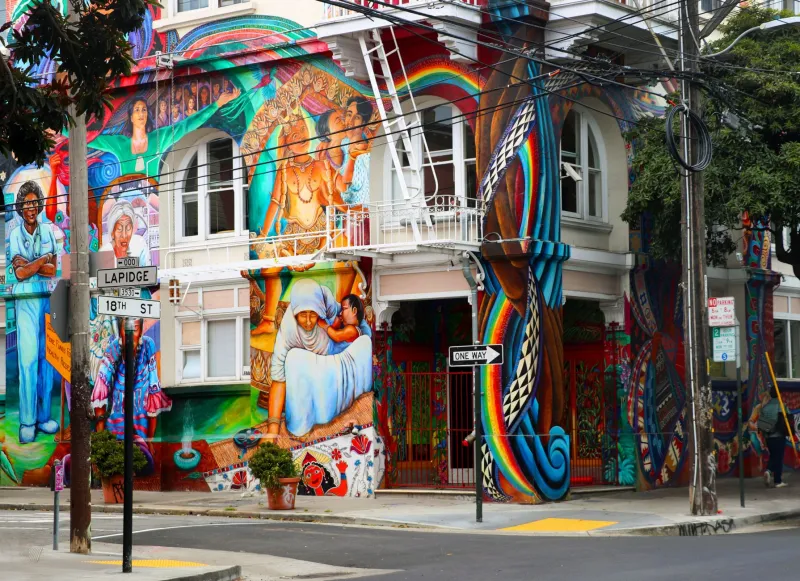
The Fenwick Community Mural Project, now in its third year, has transformed several blank walls along the district's side streets into a rolling outdoor gallery. The work ranges from hyperlocal — portraits of neighborhood figures, references to the area's history — to more abstract pieces that reflect the artists' own preoccupations. It's uneven in the way that real community art projects are always uneven. Some of it is extraordinary. Some of it is earnest and imperfect. All of it belongs there.
How to Visit Without Wrecking It
Fenwick isn't ready for a tourist rush, and with any luck, it won't get one anytime soon. But it's absolutely ready for the kind of visitor who comes to a city to actually experience it rather than just document it.
The best approach is simple: walk slowly, spend money at local businesses, and resist the urge to treat the neighborhood as a backdrop. Eat at Groundwork on a weeknight when it's not packed. Stop into Roosevelt Amara's shop even if you don't need anything framed — the conversation is worth the visit. Check the Caldwell Works schedule online before you go; open studio events are free and genuinely welcoming to strangers.
Come before the write-ups multiply and the lines form. Come while it still feels like a discovery, because that feeling — of stumbling onto something real before the world catches up — is exactly what Fenwick is offering right now.
It won't last forever. These moments never do. But right now, it's there for the finding.